
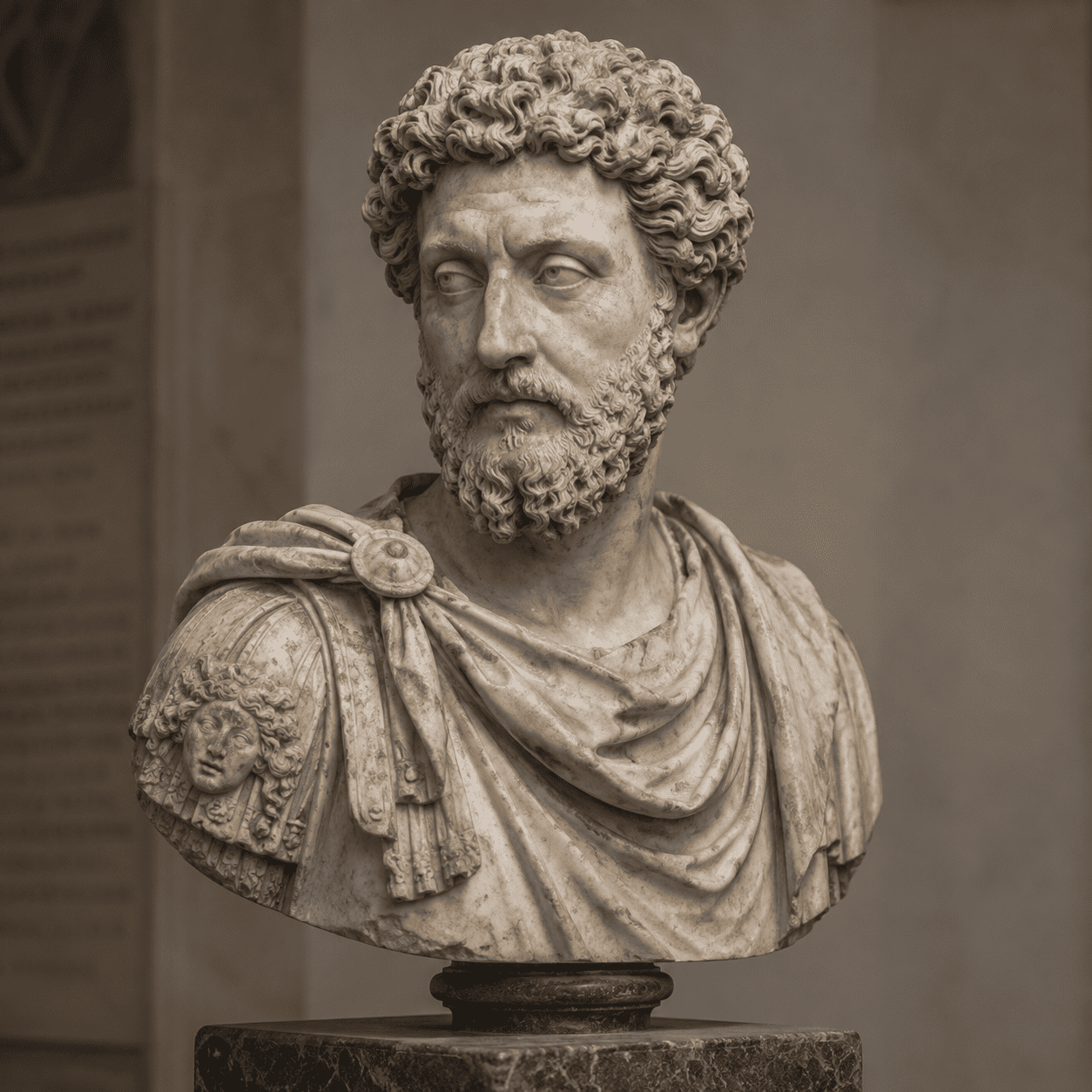
Marcus Aurelius
The most powerful man in the world kept a private journal to remind himself how to be good. We still have it.
Marcus Aurelius ruled Rome from 161 to 180 CE, the last of the so-called Five Good Emperors. He is remembered less for his wars than for a small book he never meant anyone to read: a set of notes, written to himself, that we now call the Meditations.
A book never meant to be read
The Meditations are not a treatise. They are private notes — written in Greek, in snatched moments on military campaign, with no audience in mind but their author. The first book isn’t philosophy at all: it’s a list of debts, thanking by name the people who taught him patience, restraint, and how to live. That is the tone of the whole work a man arguing himself toward being better, in private.
Power was the test, not the reward
Marcus had absolute power, and much of the Meditations is him refusing to be ruined by it. He keeps reminding himself to stay ordinary to resist the corruption a throne makes so easy.
Take care that thou art not made into a Caesar … Keep thyself then simple, good, pure, serious, free from affectation.
Marcus Aurelius, Meditations 6.30 (trans. George Long)
What modern Stoicism gets wrong about him
Pick up most “Stoicism for men” content and Marcus becomes a symbol of hardness — emotionless, iron-willed, indifferent. He wrote almost the opposite. For Marcus, anger was weakness and gentleness was strength.
To be moved by passion is not manly, but … mildness and gentleness … are they more manly; and he who possesses these qualities possesses strength, nerves and courage.
Marcus Aurelius, Meditations 11.18 (trans. George Long)
The marble bust makes him look severe. The text shows someone trying, every day, to stay kind under pressure which is the harder thing.
Where to start with the Meditations
You don’t need to read it cover to cover. A few ways in:
- Start with Book 2. The morning passage, preparing to meet difficult people without resentment sets the tone for the whole book.
- Read it in small pieces. It was written in fragments and rewards being read that way.
- Treat the repetition as the point. Marcus says the same things again because he, like us, kept forgetting them.
- Use a clear translation. George Long’s is free and public domain; modern versions read more easily.
“Look within. Within is the fountain of good, and it will ever bubble up, if thou wilt ever dig.”
— Marcus Aurelius, Meditations 7.59 (trans. George Long)
Keep reading

Memento Mori
The practice Marcus returned to every morning: remember you will die.
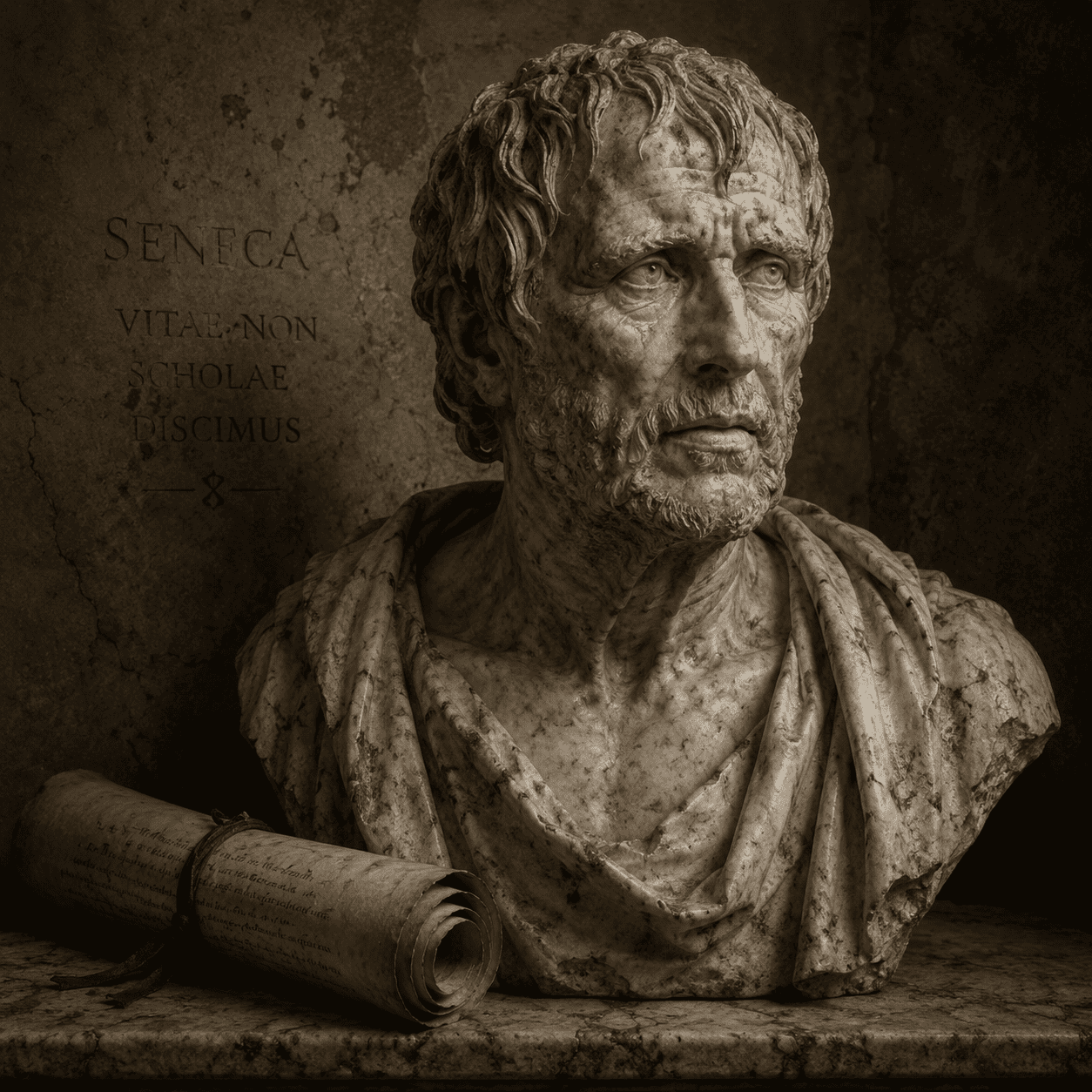
Seneca
The other great Roman Stoic brilliant, worldly, and complicated.
Stoicism
The philosophy Marcus practised, explained from the ground up.