
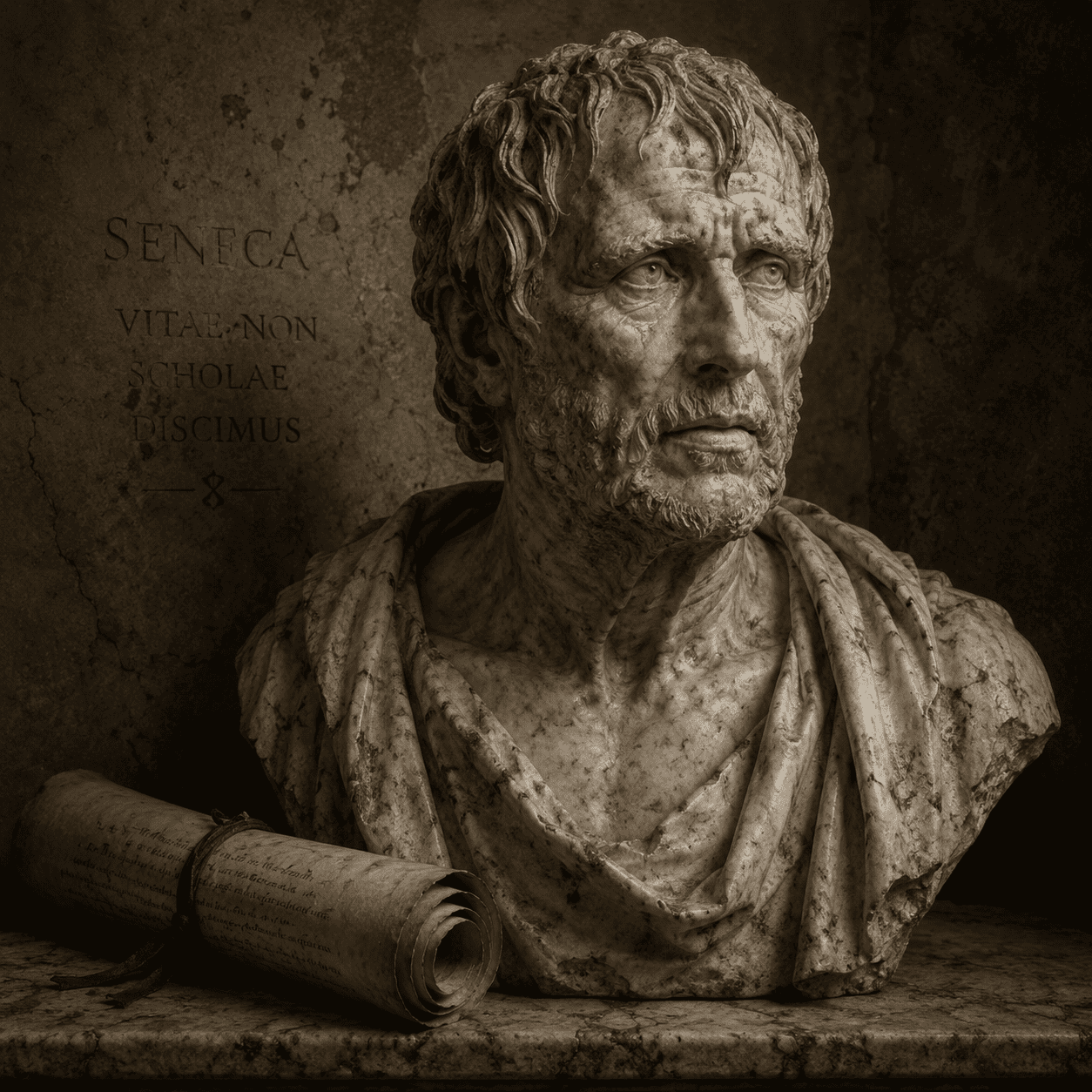
Seneca
One of the richest men in Rome wrote the most quoted lines about living simply. That contradiction is exactly why he’s worth reading.
Lucius Annaeus Seneca (c. 4 BCE – 65 CE) was a Stoic philosopher, a celebrated playwright, one of the wealthiest men in the empire, and the tutor later chief advisor, to the emperor Nero. He wrote about restraint and the shortness of life while living very close to absolute power. Few thinkers are this useful and this compromised at the same time.
The most uncomfortable Stoic
There’s no point pretending otherwise: Seneca is open to the charge of hypocrisy. He praised the simple life from inside enormous wealth estates, villas, a fortune his enemies put in the hundreds of millions of sesterces. He preached virtue while serving Nero, helping steady the regime in its better years and surviving into its worse ones. He never resolved the gap between his philosophy and his life. He lived inside it.
His own defence
Seneca knew the accusation and answered it directly in On the Happy Life. Wealth, he argued, is neither good nor evil in itself; it is a “preferred indifferent” fine to have, provided you hold it lightly and could lose it without losing yourself.
The wise man does not love riches, but he would rather have them; he does not admit them into his heart, but into his house.
Seneca, On the Happy Life (trans. Aubrey Stewart)
Whether that reads as wisdom or as a rich man rationalising is, fairly, left to you.
Why read him anyway
Because the gap between knowing and doing is the whole problem and Seneca writes from inside it, not above it. His Moral Letters to Lucilius are the most practical, quotable Stoic writing we have: short, direct, and honest about how hard this is.
There are more things … likely to frighten us than there are to crush us; we suffer more often in imagination than in reality.
Seneca, Letters 13 (trans. Richard Gummere)
A flawed man who understood his own weakness can be a better guide than a saint who never felt the pull.
Where to start
- Read On the Shortness of Life first. Short, blunt, and the best thing he wrote on how we squander the one resource we can’t get back.
- Then dip into the Letters. Each is a self-contained essay; start anywhere.
- Read him critically. Hold his life and his words side by side the friction is the point.
- Note how he died. Forced to take his own life by Nero in 65 CE, he tried to meet it with the calm he’d spent decades writing about.
“It is not that we have a short space of time, but that we waste much of it.”
— Seneca, On the Shortness of Life (trans. Aubrey Stewart)
Keep reading
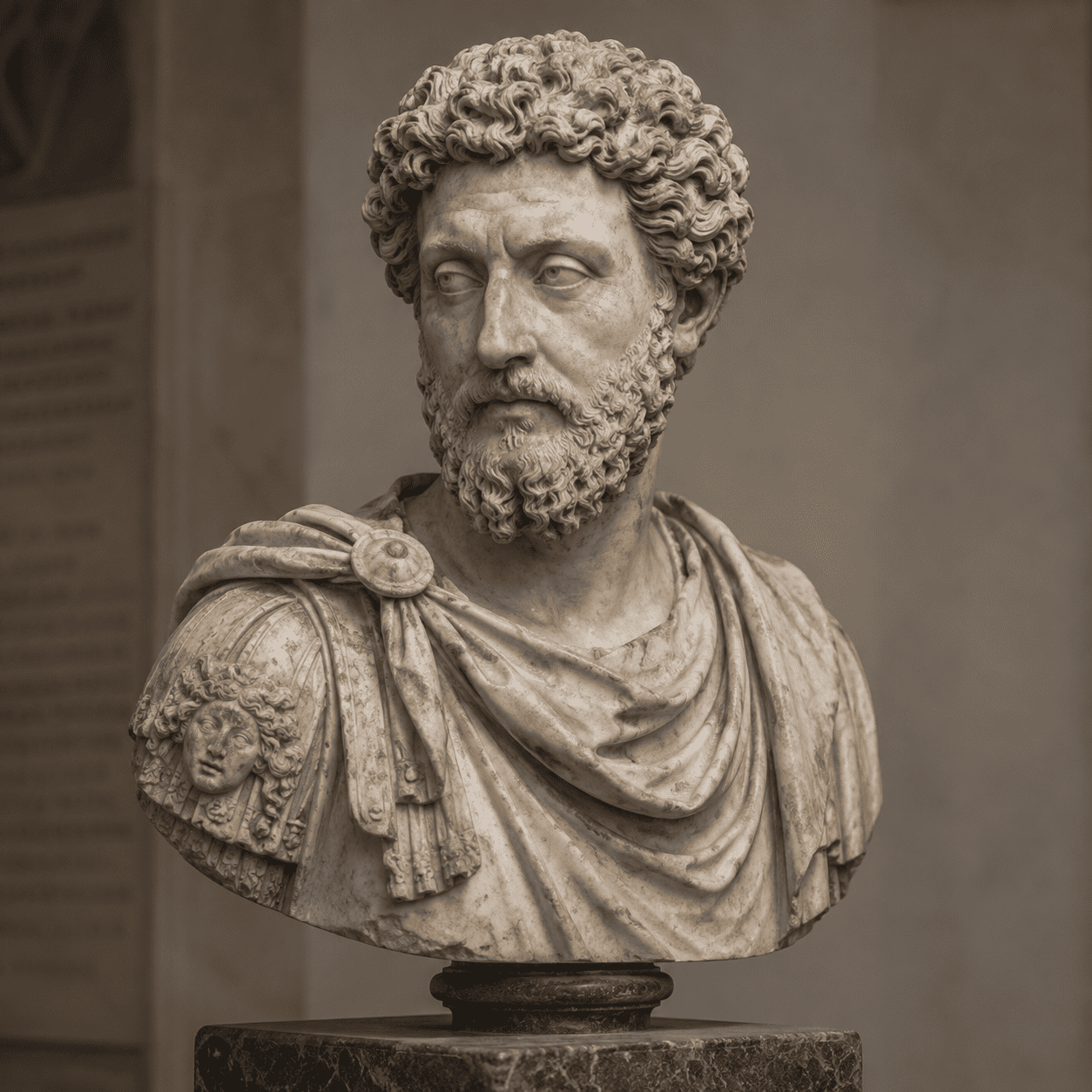
Marcus Aurelius
The emperor who read Seneca and wrote his own private Stoic notes.

Memento Mori
Seneca’s great theme: how short life is, and how we waste it.
Stoicism
The school Seneca belonged to, explained from the ground up.