Seneca: Stoic Sage or Hypocrite? The Philosopher Who Was Also Rich
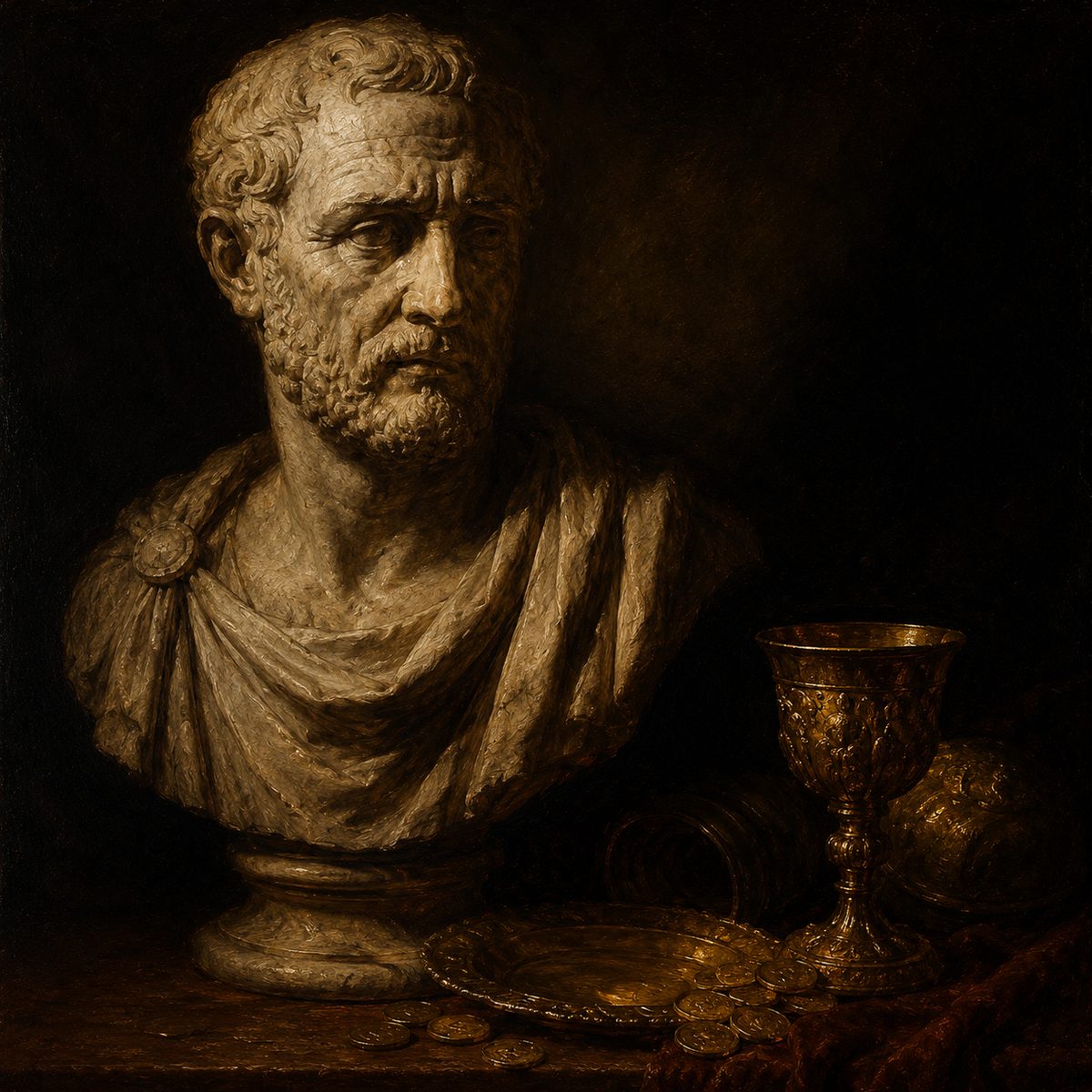
Seneca is the most quotable of the Stoics and the most uncomfortable. He wrote that wealth doesn’t matter, that the rich are slaves to their fortunes, that a philosopher should be ready to lose everything without flinching. He also happened to be one of the wealthiest men in the Roman Empire. So which was he: a sage, or a hypocrite writing beautiful lines about poverty from a marble villa?
The charge is old, serious, and worth taking seriously partly because how you answer it reveals what you think Stoicism is actually for.
The case for “hypocrite”
It’s a strong one. Seneca (c. 4 BC–AD 65), tutor and then chief adviser to the emperor Nero, amassed an enormous fortune: estates at Baiae and Nomentum, an Alban villa, holdings in Egypt. In AD 58 a senator named Publius Suillius attacked him publicly how had a philosopher grown so staggeringly rich in just a few years of imperial favour? The Roman historian Tacitus preserves the accusation. The contradiction is hard to miss: a man teaching that poverty is no evil while living in extraordinary luxury.
Seneca’s defence
He didn’t dodge it. In his essay On the Happy Life, written around the time of these attacks, Seneca answered head-on, and his argument is pure Stoic theory: wealth is a “preferred indifferent” not good in itself, but better to have than not, so long as you hold it correctly.
he does not love riches, but he prefers to have them; he does not receive them into his spirit, but only into his house: nor does he cast away from him what he already possesses, but keeps them, and is willing that his virtue should receive a larger subject-matter for its exercise.
Seneca, On the Happy Life (trans. Aubrey Stewart)
The Stoic test was never whether you have money, but whether money has you. The sage may be rich, provided he could lose it all tomorrow and lose nothing of himself; wealth becomes raw material for virtue generosity, building, helping rather than the aim of life. On paper, it’s coherent.

The honest part
What makes Seneca more interesting than a tidy hypocrite is that he admitted the gap. In the same work he wrote one of the most disarming sentences in ancient philosophy:
I am not a wise man… so do not require me to be on a level with the best of men, but merely to be better than the worst: I am satisfied, if every day I take away something from my vices and correct my faults.
Seneca, On the Happy Life (trans. Aubrey Stewart)
That isn’t the move of a fraud. It’s the position of a man who knows he’s falling short and says so out loud. Seneca never claimed to be the Stoic sage that figure was an ideal almost no one reaches. He claimed to be a patient, working daily toward health.
So — sage or hypocrite?
Probably neither, and a little of both. Seneca clearly enjoyed his wealth more than his own philosophy recommended, and parts of On the Happy Life do read like a brilliant man rationalising. But “hypocrite” implies he didn’t believe what he wrote, and the evidence runs the other way: he taught a standard he openly confessed he hadn’t reached and in the end he reached it. Ordered by Nero to take his own life in AD 65, Seneca died with exactly the composure he had spent a lifetime writing about.
The useful lesson isn’t to excuse him or cancel him. It’s that the worth of an idea doesn’t depend on the virtue of the person who wrote it. Seneca’s writing is among the most practical work ever produced on anger, grief, time and fear worth reading even though, and partly because, its author was a flawed man straining to live up to it. A philosophy can be true even when the philosopher is unfinished.
The Practical Philo’s read
The hypocrite take is the easy one, and it falls apart when you actually read him. Seneca knew. The letters are full of him saying outright that he wasn’t a sage, that he was a patient still trying to get well. Stoicism never claimed the philosopher had to be perfect, only that he keep narrowing the gap.
There’s a harder criticism than “he was rich,” though, and it’s the one that should stick. He stayed at Nero’s side after it became clear what Nero was. Some of his political work made bad outcomes worse. You can hold both at once: the philosophy is excellent and useful, the man made compromises that hurt people, and pretending those compromises don’t exist is what will eventually get the philosophy thrown out with him.
Related reading
- Is Ryan Holiday Legit?
- Stoicism for Burnout: A Field Guide
- A 7-Day Memento Mori Practice
- Zeno of Citium: The Merchant Who Founded Stoicism
- Who Was Seneca?
Sources
- “Seneca the Younger” Stanford Encyclopedia of Philosophy; Internet Encyclopedia of Philosophy; Britannica; Wikipedia (incl. Tacitus on Suillius’s attack).
- Seneca, On the Happy Life (De Vita Beata), trans. Aubrey Stewart (public domain) Standard Ebooks.