

Stoicism
A 2,300-year-old philosophy for living well, built on one question: what is actually up to you?
Stoicism is a practical philosophy founded in Athens around 300 BCE. Its promise is simple and demanding: you can live well, whatever happens, by focusing on what is genuinely up to you, your judgments and your actions. And building character instead of chasing circumstances.
Where it comes from
Stoicism was founded by Zeno of Citium, who taught at the Stoa Poikile the “Painted Porch” in the Athenian agora. That porch gave the school its name. We know it best through three Romans: Seneca the statesman, Epictetus the former slave, and Marcus Aurelius the emperor three very different lives, one shared practice.
The core idea: the dichotomy of control
If Stoicism has a foundation, this is it. Some things are up to us; most are not. Peace and effectiveness come from telling the two apart investing fully in the first, and meeting the second without panic.
Some things are in our control and others not. … in our control are opinion, pursuit, desire, aversion … not in our control are body, property, reputation, command.
Epictetus, Enchiridion 1 (trans. Elizabeth Carter)
Built on four virtues
The Stoics held that the only true good is character and character means four virtues: wisdom, courage, justice, and temperance. Everything else health, money, reputation is a “preferred indifferent”: worth pursuing sensibly, but never where your peace should rest.
Four things Stoicism is NOT
Most of what circulates online under the name gets it backwards. Four corrections:
- Not positive thinking. It doesn’t ask you to feel good or expect the best. It asks you to see clearly including the bad and act well anyway.
- Not being emotionless. The goal is apatheia freedom from destructive passion, closer to equanimity than to numbness. Marcus wept for his teacher; Seneca wrote of love. The aim is not to feel nothing, but to not be ruled by it.
- Not “grindset” or dominance. Justice and kindness are core virtues. A Stoicism that’s all hardness and hustle has quietly dropped half the philosophy.
- Not a wall of quotes. Inspiring lines are the doorway, not the room. The real work is a daily practice, not a screenshot.
How to actually start
- Use the dichotomy of control on one real worry today. Separate the part that’s yours to act on from the part that isn’t.
- Read one of the three. Start with Epictetus’s short Enchiridion, or Marcus’s Meditations, Book 2.
- Keep a brief evening review. What did you handle well? What ran you? No score just attention.
- Practise negative visualisation. Briefly picture losing what matters, so you stop sleepwalking past it.
“Men are disturbed not by the things which happen, but by the opinions about the things.”
— Epictetus, Enchiridion 5 (trans. Elizabeth Carter)
Keep reading
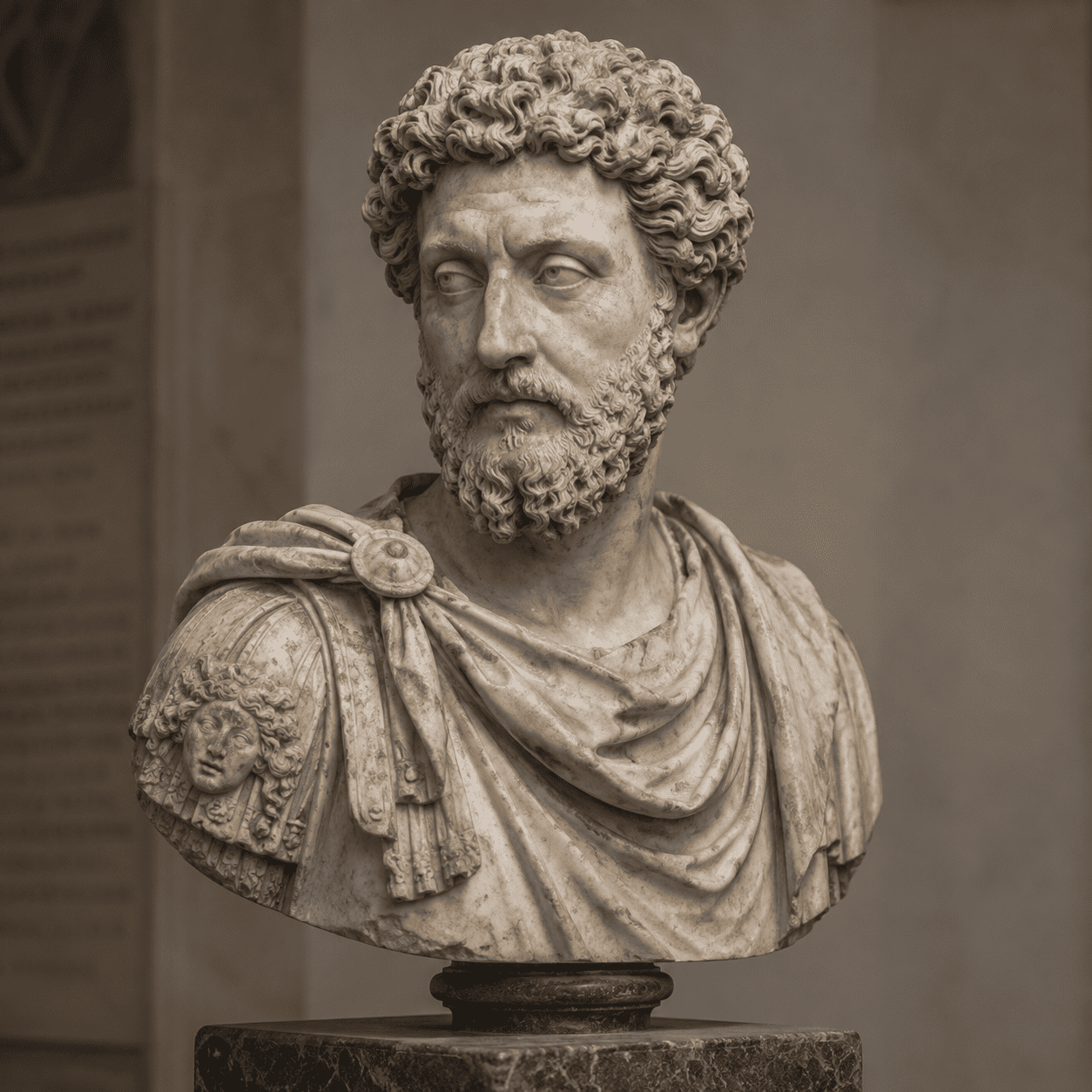
Marcus Aurelius
Stoicism practised by a Roman emperor, in his own private notes.
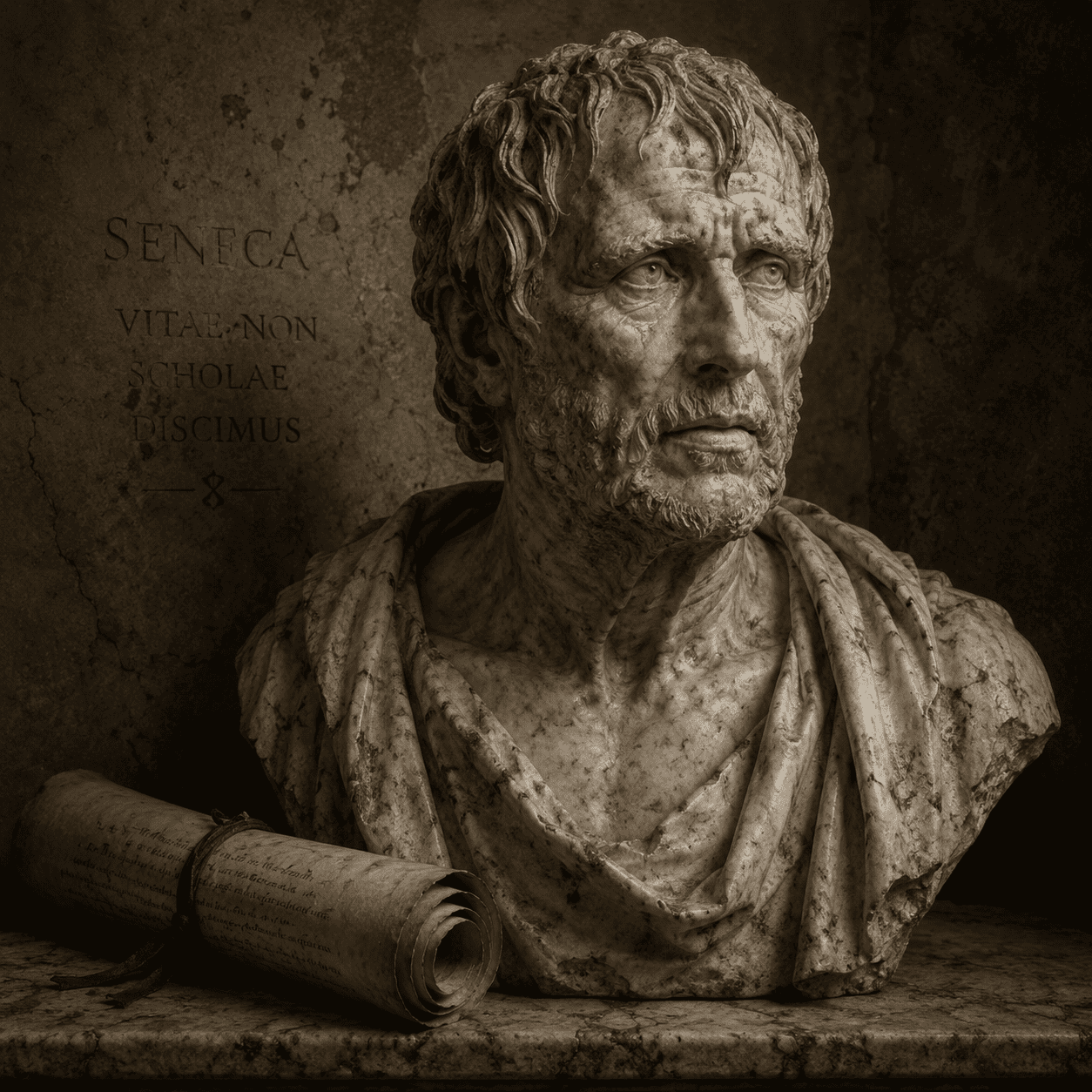
Seneca
The most quotable Stoic brilliant, worldly, and complicated.

Memento Mori
The Stoic practice of remembering death to sharpen life.