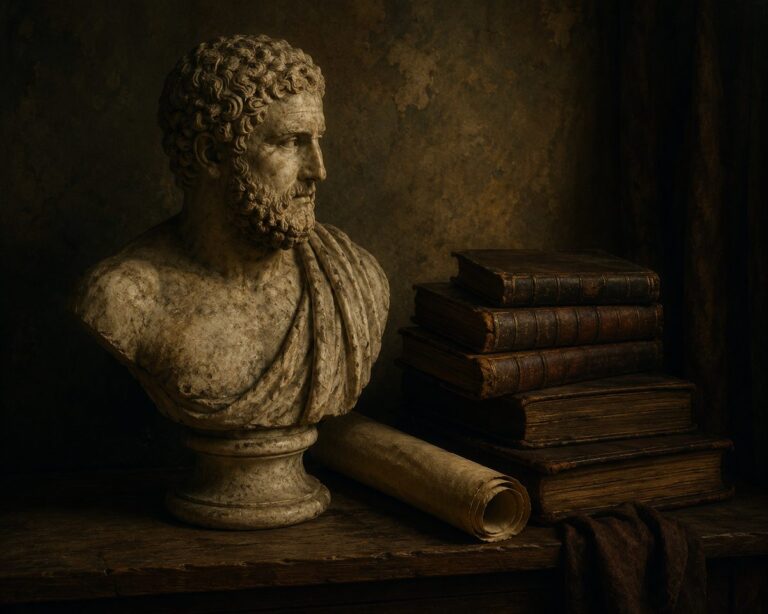
Who Was Seneca? Rome’s Stoic Statesman, Playwright, and Power Broker
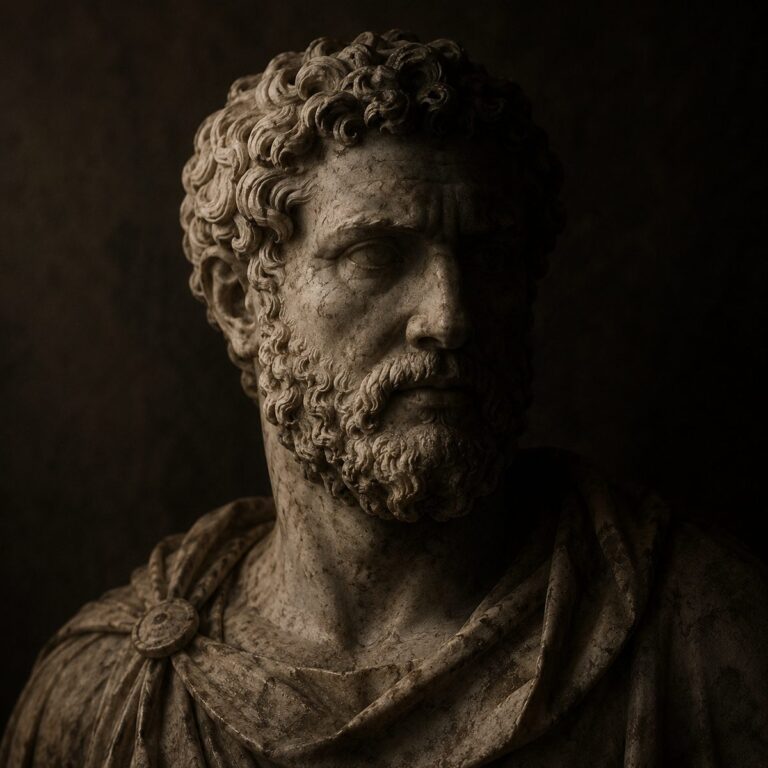
Most Stoics led quiet lives. Seneca led an extraordinary one. He was a bestselling playwright, one of the richest men in Rome, the tutor and right hand of an emperor and, in the end, that same emperor’s victim. He’s also the most readable of the Stoics, which is why his words still circulate two thousand years later. But the life behind them is stranger than the calm prose suggests.
Here is who Seneca actually was.
From Córdoba to Rome
Lucius Annaeus Seneca was born around 4 BC in Corduba modern Córdoba, in Roman Spain into a wealthy, literary family; his father, Seneca the Elder, was a celebrated teacher of rhetoric. Sent to Rome as a boy, he trained in rhetoric and philosophy and rose as an orator and senator, building a formidable reputation and, in time, a formidable fortune.
Exile
His career nearly ended in AD 41, when the emperor Claudius banished him to the island of Corsica on a charge of adultery with the emperor’s niece an accusation that may well have been political. Seneca spent roughly eight years in exile, writing philosophy and, by some accounts, an awkwardly flattering plea to be recalled. It’s a useful corrective to the marble-saint image: the great Stoic on fortune’s indifference also very much wanted off that island.
Tutor to a future tyrant
In AD 49 he was recalled, through the influence of Agrippina, to tutor her teenage son the future emperor Nero. When Nero took the throne in 54, Seneca became his chief adviser. For about five years, he and the praetorian prefect Burrus effectively ran the empire, and Nero’s early reign was comparatively just and well governed. It was the peak of Seneca’s worldly power: a Stoic philosopher steering Rome.
Wealth, withdrawal, and the problem of Nero
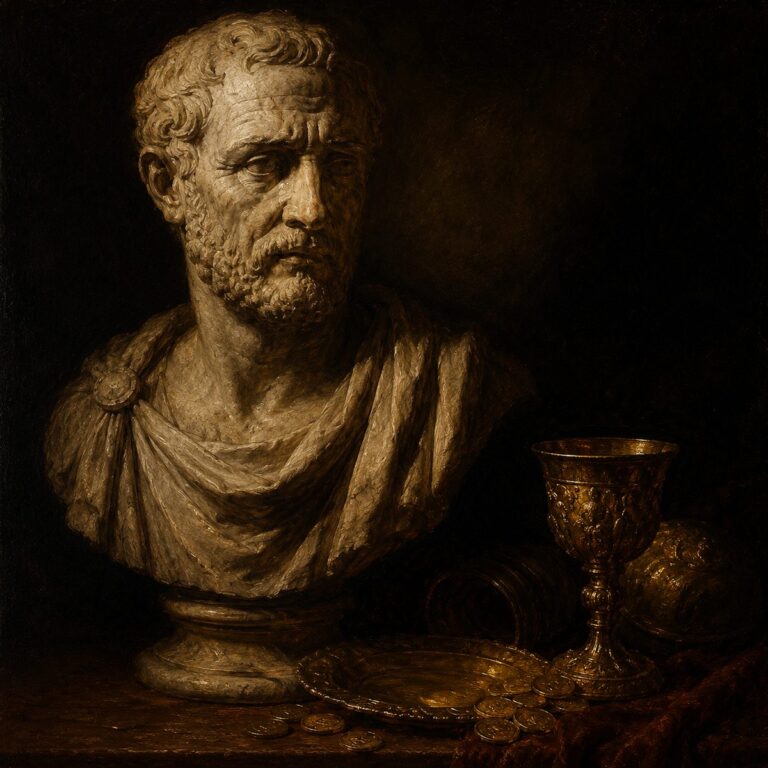
It didn’t last. As Nero grew older and crueller, Seneca’s position became impossible adviser to a man sliding into tyranny. He had also grown enormously rich, which drew the obvious charge of hypocrisy, a tension we examine in Seneca: Sage or Hypocrite? Around AD 62 he withdrew into semi-retirement, and it was in these final years that he wrote his most enduring work, the Letters to Lucilius. He never pretended to have it all figured out:
I am not a wise man… I am satisfied, if every day I take away something from my vices and correct my faults.
Seneca, On the Happy Life (trans. Aubrey Stewart)
The famous death
In AD 65, Seneca was accused of involvement in the Pisonian conspiracy to assassinate Nero. Whether or not he truly took part, Nero ordered him to take his own life. According to the historian Tacitus, Seneca met the order with composure, dying as his philosophy had trained him to calmly, and on his own terms as far as he could manage. The man who had written so much about facing death finally had to do it, in the most political way imaginable.
What he left behind
Seneca was astonishingly prolific. Beyond the Letters he wrote moral essays (On the Shortness of Life, On Anger, On the Happy Life), three Consolations, a book of Natural Questions, a satire mocking the dead Claudius, and eight tragedies that shaped European drama for centuries. He’s the Stoic who proves the philosophy isn’t only for serene hermits in his case it was forged amid wealth, power, danger and compromise, which is part of why it still lands: he wasn’t writing from safety. (His thoughts on wasted time hit especially hard given how his own ended.)
Playwright, senator, tutor, exile, multimillionaire, victim Seneca packed several lives into one and wrote about all of it with unusual honesty. He’s the best place to start if you want Stoicism not as theory, but as something a real, flawed, powerful person actually tried to live.
Related reading
- Seneca: Stoic Sage or Hypocrite?
- Seneca’s Letters: Where to Start
- Zeno of Citium: The Merchant Who Founded Stoicism
Sources
- “Seneca the Younger” — Britannica; Stanford Encyclopedia of Philosophy; Internet Encyclopedia of Philosophy.
- Seneca, On the Shortness of Life & On the Happy Life, trans. Aubrey Stewart (public domain) Standard Ebooks.