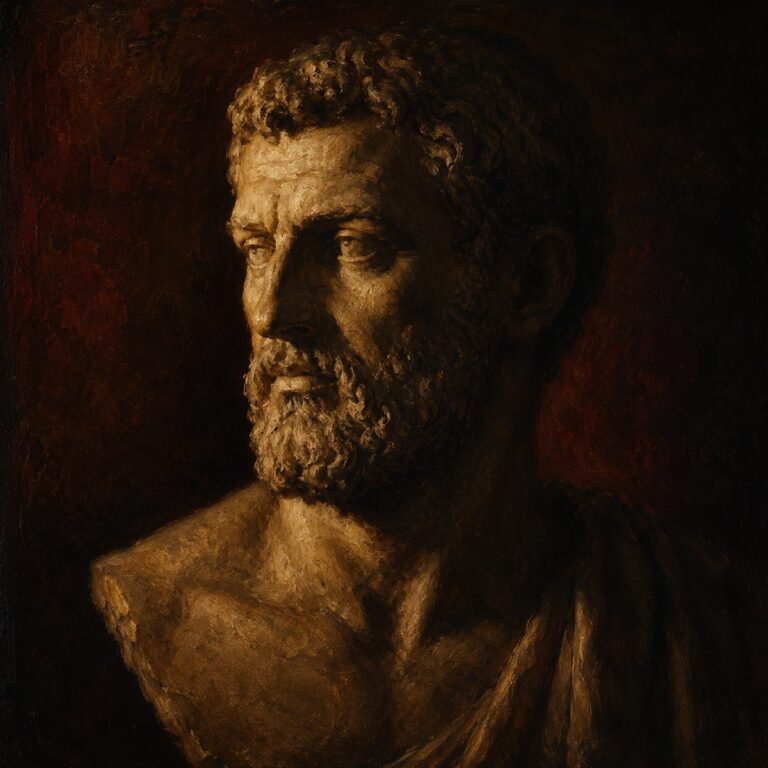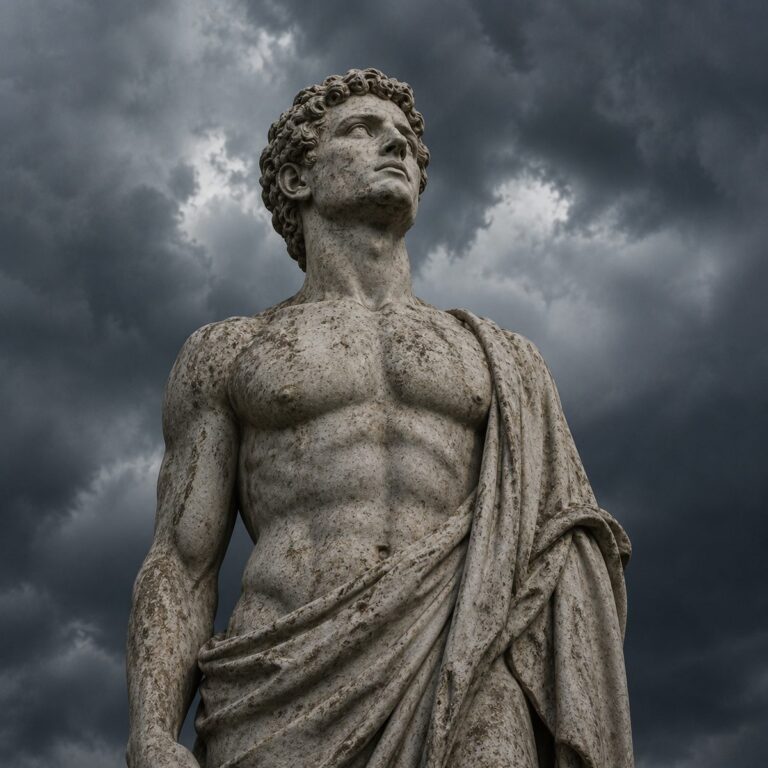
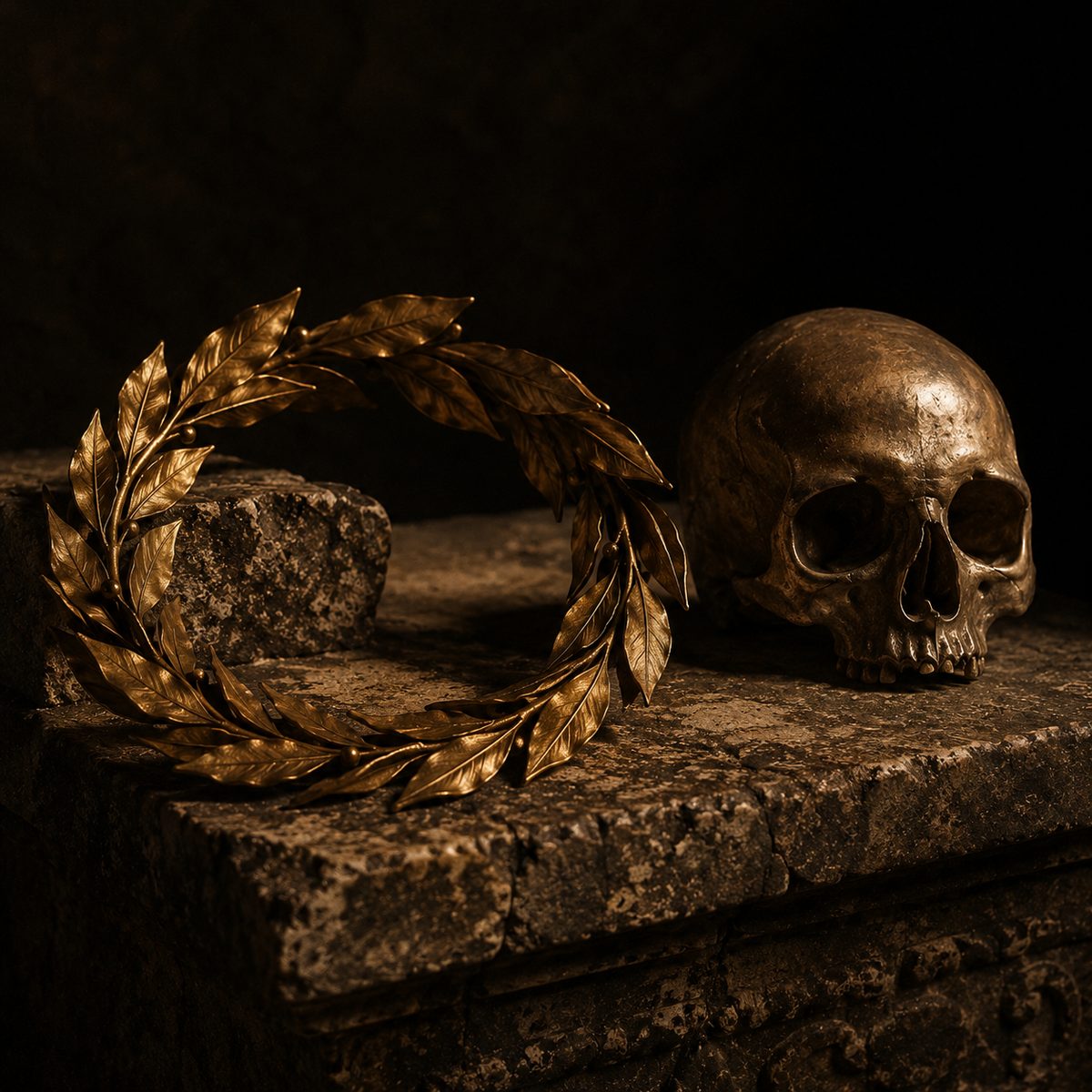
What Does Memento Mori Really Mean? (Beyond the Tattoo)
“Memento mori” has become an aesthetic skull tattoos, black coins, gothic posters. The Latin phrase means, bluntly, “remember that you must die.” But reduced to a logo, it loses almost everything that made it powerful. The real meaning isn’t morbid at all. It’s one of the most life-affirming ideas the ancient world produced.
What the phrase literally means
Memento mori is Latin for “remember (that) you must die” or loosely, “remember death.” Two words doing a great deal of work: a standing reminder that your time is finite and you don’t get to know when it runs out.
Where it came from
The most famous origin story comes from ancient Rome. By one tradition whose historical reliability scholars debate a victorious general parading through Rome in triumph had a companion riding behind him, murmuring a reminder of his mortality amid the cheering. The early Christian writer Tertullian records the words as, roughly, “Look behind you; remember you are but a man.” Whether or not it literally happened, the idea is sharp: at the very peak of success, remember you’ll die and hold all of it more lightly.
The phrase later became central to Christian art and devotion the skulls, hourglasses and wilting flowers of “vanitas” paintings but the underlying practice is older still. You find it across Greek and Roman philosophy, and nowhere more practically than in Stoicism.
Why it’s not morbid
Here is what the tattoo version misses. The Stoics didn’t dwell on death to be gloomy; they used it as a lens that brings the rest of life into focus. Remembering you’ll die does three things at once: it cuts trivial worries down to size, it makes you grateful for what you have now, and it pushes you to stop postponing what matters. Epictetus told his students to keep it in daily view:
Let death and exile, and all other things which appear terrible be daily before your eyes, but chiefly death; and you will never entertain any abject thought, nor too eagerly covet anything.
Epictetus, Enchiridion 21 (trans. Elizabeth Carter)
Marcus Aurelius used the same move on himself not to despair, but to act: “Since it is possible that thou mayest depart from life this very moment, regulate every act and thought accordingly.”
Memento mori vs. “YOLO”
It’s tempting to read “remember you’ll die” as “so eat, drink and indulge.” The Stoic version is the opposite. Where “you only live once” uses death as an excuse to grab pleasure, memento mori uses death as a reason to live well — to be a better friend, parent and person while there’s still time, rather than to chase another hit of fun. Same fact about mortality; very different conclusion. (It’s part of what separates the Stoics from the Epicureans.)

The Practical Philo’s read
“Remember you must die” isn’t supposed to be aesthetic. It’s a deletion tool. You hold death in view long enough to see which parts of your day wouldn’t survive a heart attack tonight: the grudge from 2019, the meeting you’re dreading, the resentment you’re rehearsing in the shower. Most of them shrink instantly. That’s the work.
The current memento mori scene, coins, tattoos, desk skulls isn’t a problem in itself. It’s a problem if it replaces the thought. The Stoics didn’t keep skulls on their desks. They kept the thought in their head, every morning, and let it cut through. If the coin reminds you to do that, keep the coin. If the coin is the practice, you bought the case and not the medicine.
How to actually use it
You don’t need a tattoo or a coin (though there’s nothing wrong with a reminder you’ll actually see). The practice is simpler and free: once a day, briefly remember that this ends then ask what that makes important right now. We turned exactly that into a concrete 7-day memento mori practice if you’d like a structured way in.
Memento mori isn’t really about death. It’s about attention using the one certainty we all share to stop sleepwalking through the time we have. Strip away the aesthetic and that’s what’s left, and it’s worth far more than any tattoo. And if any of this sits heavily with you, please be gentle with yourself, and read the short note below.
If you’re struggling with thoughts of death or self-harm, please reach out you don’t have to face it alone, and things can get better with support. In the US, you can call or text 988 (the Suicide & Crisis Lifeline) any time, free and confidential; outside the US, findahelpline.com lists free crisis lines for your country. If you’re in immediate danger, call your local emergency number.
Related reading
Sources
- “Memento mori” (meaning and origin): Encyclopaedia Britannica; Wikipedia.
- Epictetus, Enchiridion 21, trans. Elizabeth Carter (public domain): Internet Classics Archive; Marcus Aurelius, Meditations 2.11, trans. George Long (public domain): Standard Ebooks.