
Stoicism for Grief: When You Can’t Just “Be Strong”
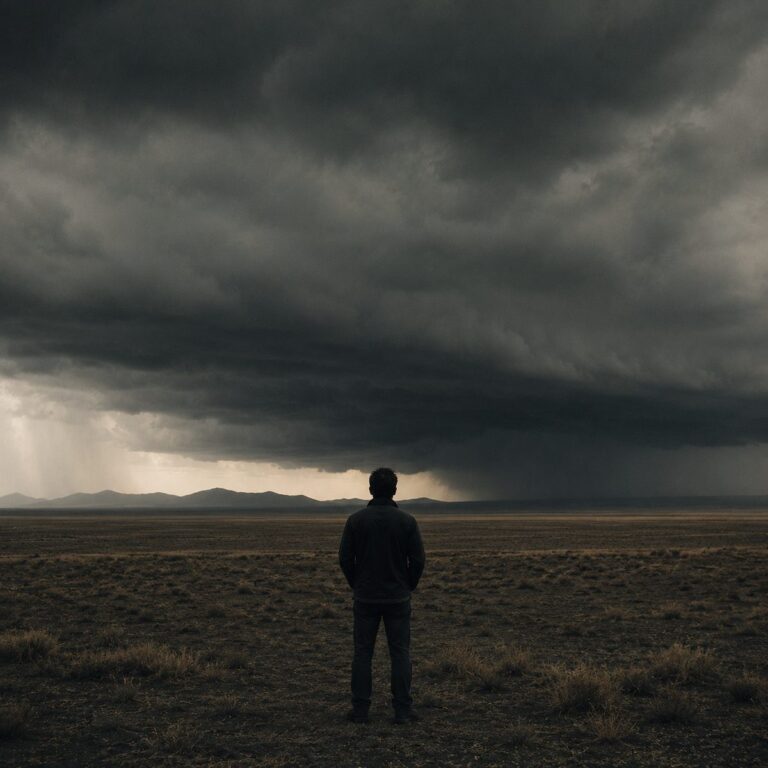
The advice arrives almost on schedule. Someone close to you has died. A friend or a stranger online says, gently: “Stay strong. You’re stoic, aren’t you?” That’s the well-meaning version. There’s also the harder one, the “real men don’t cry” version dressed up as ancient wisdom but they both rest on the same premise: that grief is the failure, and the stoic response is to feel less of it.
This is the most popular reading of Stoicism on the internet right now. It is also, demonstrably, the opposite of what the actual Stoics taught.
Modern Stoicism teaches you to detach from grief. Real Stoicism teaches you to grieve fully and then, when you can, return. The difference is the difference between numbness and equanimity, and most contemporary “stoic” advice on loss gets it exactly backwards. The proof is in the Stoics’ own writing. They didn’t lecture grieving people to feel less. They wrote three full books to console them, and the consolations explicitly permit the tears.
Why modern Stoicism gets this exactly backwards
The misreading isn’t new. Around 300 BCE, a philosopher named Crantor wrote an open letter to a bereaved friend what was called, in that genre, a consolatio. In it, he objected to a school of philosophy that called itself dispassionate.
I cannot by any means agree with those who extol some kind of impassivity. Such a thing is neither possible nor beneficial. This absence of pain comes at a high price: it means being numb in body, and in mind scarcely human.
Crantor, quoted by Cicero, Tusculan Disputations 3.10
Crantor was right about the people he was criticising. He had in mind the Cynics, the philosophical school whose ideal was to toughen the mind into stone. Sleep on the ground. Walk barefoot. Embrace cold marble statues until you can no longer feel them. The Cynic project was, in essence, the slow construction of an emotional callus.
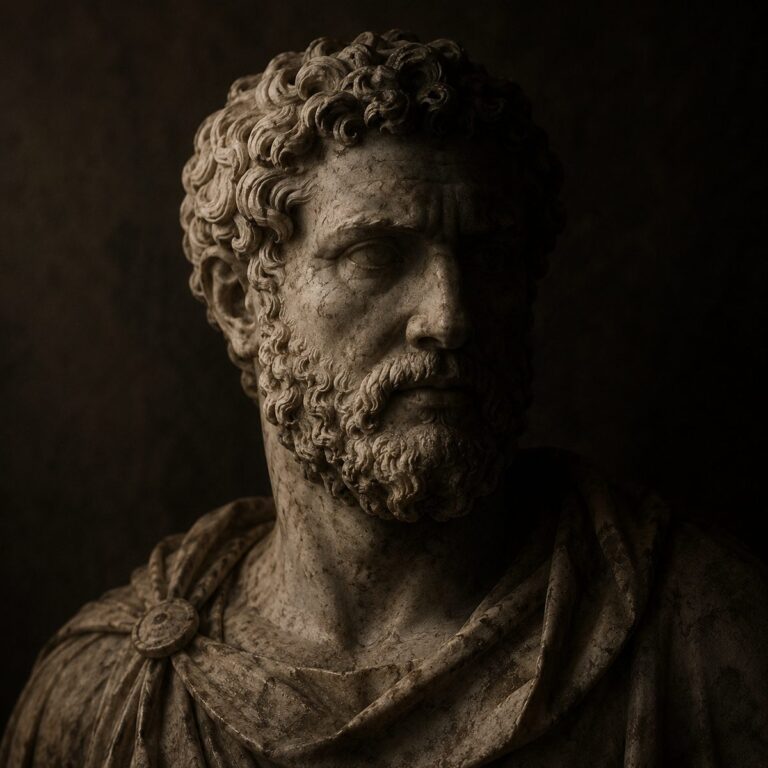
But Crantor’s objection has been mistakenly applied to the Stoics ever since. And the modern Stoicism corner of the internet the videos with “master your emotions” titles, the influencer scripts about “the stoic mindset” has done a remarkable thing: it has resurrected Cynic apatheia and labelled it Stoic. The doctrine being sold under Marcus Aurelius’s name today is, in many cases, closer to Diogenes of Sinope’s.
What the Stoics actually taught about feeling things
Seneca, writing to a friend, drew the line himself:
Our position is different from theirs, in that our wise person conquers all adversities, but still feels them; theirs does not even feel them.
Seneca, Epistulae Morales 9.3
Read that line slowly. The wise person still feels. The Stoic project is not to stop the feeling. It is to keep functioning through it. He was even more direct elsewhere:
There are things that strike the wise person even if they do not overthrow him: physical pain, loss of a limb, loss of friends and children, the calamity of his fatherland in flames. I do not deny that the wise person feels these, for we do not endow him with the hardness of stone or of iron. To endure without feeling what you endure is not virtue at all.
Seneca, On the Constancy of the Wise 10.4
To endure without feeling is not virtue at all. This is Seneca pre-empting, by sixteen centuries, every motivational poster that pairs his face with a quote about “becoming unshakeable.” He is saying, point blank, that shake-ability is part of being human.
The ancient Stoic theory has technical names for this, and they matter. The Stoics recognised what they called propatheiai “pre-emotions” or “first movements.” These are the involuntary, pre-rational reactions that hit you before reason has a chance to evaluate the situation. The blush. The wince. The sharp intake of breath. The first tears. Epictetus says explicitly, in a fragment preserved by Aulus Gellius, that even the wise person’s mind, when struck by something terrifying, “necessarily responds and is contracted and grows pale for a little while.” Not because the wise person believes something terrible has happened. Because she is, like every other human, embodied.
And they distinguished this from pathē, the prolonged, value-laden, story-building emotions that come after the first movement, when reason has joined in. If grief is the involuntary tightening of your chest when you hear the news, the pathos is the months of identifying yourself with the loss, building a life around the absence, refusing to come back. The first is given. The second is, eventually, a choice. Stoicism’s work begins on the second, not the first.
Seneca wrote three books to console grieving people
The strongest evidence for what Stoicism actually says about grief is that the most prolific Stoic writer in the Roman world spent significant time writing comfort letters to the bereaved.

Three of them survive, all attributed to Seneca. The Consolatio ad Marciam, written around 40 CE, was sent to a Roman noblewoman who had been mourning her son Metilius for three years. Ad Helviam was written from exile around 42 CE to console his own mother, his mother for the grief his banishment had caused her. Ad Polybium, written shortly after, was for a court official who had lost his brother.
These are not works that scold grieving people. They are works that sit with grieving people. Read the opening of Ad Marciam and the thing that strikes you is the gentleness:
I will not invite you to practise the sterner kind of maxims, nor bid you bear the lot of humanity with more than human philosophy; neither will I attempt to dry a mother’s eyes on the very day of her son’s burial.
Seneca, Ad Marciam
That is a Stoic philosopher, in a Stoic book about grief, saying out loud: I’m not going to try to make you stop crying. He goes further, in the same essay, about tears specifically: “Tears fall, no matter how we try to check them, and by being shed they ease the soul. Let us allow them to fall, but let us not command them so to do.” This is the antithesis of “be strong.” This is permission.
What Seneca does push back on, in the rest of Ad Marciam, is the third year. After three years she is still in the same place. He gently argues slowly, patiently, with examples and tenderness that this is not because the grief is too large but because she has chosen to remain in it. There is, he suggests, a way to keep loving the son and to keep on living. The book is a kind of careful midwifing of someone back into the world.
That is a different project from “feel less.” It is “feel fully, then come back when you can.”
The distinction Stoicism actually draws
If there is a Stoic doctrine on grief, it is roughly this:
The first wave is not the problem. It is the body responding correctly to something that has actually happened. Suppressing it, or worse, performing toughness about it, is not Stoic — it is theatre. It is also slightly cruel to yourself.
The work begins later. When you can think, when the first wave has receded, the Stoic asks two questions. First: what is true about this loss? Not what should I tell myself; what is actually true. The person is gone. You are not. Your character, your responses, your decisions, how you treat the people still in front of you, is still yours. That has not been taken. Second: what is the right response, given what is true? Grief that draws you closer to the people still alive is appropriate. Grief that uses the loss as a reason to withdraw from the world the dead person loved that is something else, and the Stoics gently called it out.
The Practical Philo’s read
The “stoic” who tells you not to feel grief is selling you something else. The actual Stoic position is harder than detachment: feel it, sit in it, and then do the slow work of finding what is still true and still yours. Detachment is a Cynic technique with a Stoic costume. Real Stoicism never asked you to stop loving the person you lost. It asked you, eventually, to keep living anyway.
What this means in practice
If you have lost someone and people are telling you to stay strong or you’re telling yourself to the Stoic permission is to stop performing. Cry when you need to cry. Sit in the empty room. Read the old letters. The first movements are given, not failures.
When the first wave starts to recede which it does, on its own clock, not yours, the Stoic work is the careful re-examination of what’s true. Most of what hurts most about loss is not the loss itself but the secondary judgments we build around it: that we should have done more, that we cannot go on, that we are now defined by the absence. Some of those judgments may be true. Most, on examination, are not. That examination is not done in the first week. It is done in the second year. It is also done, ideally, with help the same patient examination of judgments that the Stoic approach to anxiety applies to a different kind of pain. Seneca did not write to Marcia from a position of detachment but from the position of someone who had also buried people and was, with her, trying to think.
And it is permanent work, not a single pass. The Stoics did not believe grief was something you finish and move past. They believed it was something you returned to throughout a life, every time a memory caught you. (For more on the Stoic approach to loss specifically, see Marcus Aurelius on Death.). The goal was never an absence of feeling. It was a feeling that no longer ran you.
The shortest way to say what Stoicism teaches about grief is this: it does not ask you to feel less. It asks you, when you are ready, to keep going. Seneca wrote three books to people who had lost what they could not get back, and not once did he tell them to be strong. He told them, in essence, that grief was the price of having loved and that the love had been worth the price, and that the love was still theirs even when the person was not.
If anyone tells you Stoicism wants you to be unmoved, they are selling you Cynicism in a Stoic costume. The real article costs more and gives more in return.
Sources
- Seneca, De Constantia Sapientis (On the Constancy of the Wise) 10.4. Loeb Classical Library, trans. John W. Basore.
- Seneca, Epistulae Morales 9.3. Loeb Classical Library, trans. Richard M. Gummere; cited via Margaret Graver.
- Seneca, Ad Marciam, Ad Helviam, Ad Polybium. Loeb Classical Library vol. 254, trans. John W. Basore.
- Epictetus, Fragment 9, preserved in Aulus Gellius, Noctes Atticae.
- Cicero, Tusculan Disputations 3.10 (for Crantor’s objection).
- Margaret Graver, Stoicism and Emotion. University of Chicago Press, 2007.
- Margaret Graver, “The Dispassionate Life,” Stoicon keynote, Toronto, 2017.