Marcus Aurelius on Kindness vs. Anger: The Side Modern Stoicism Skips
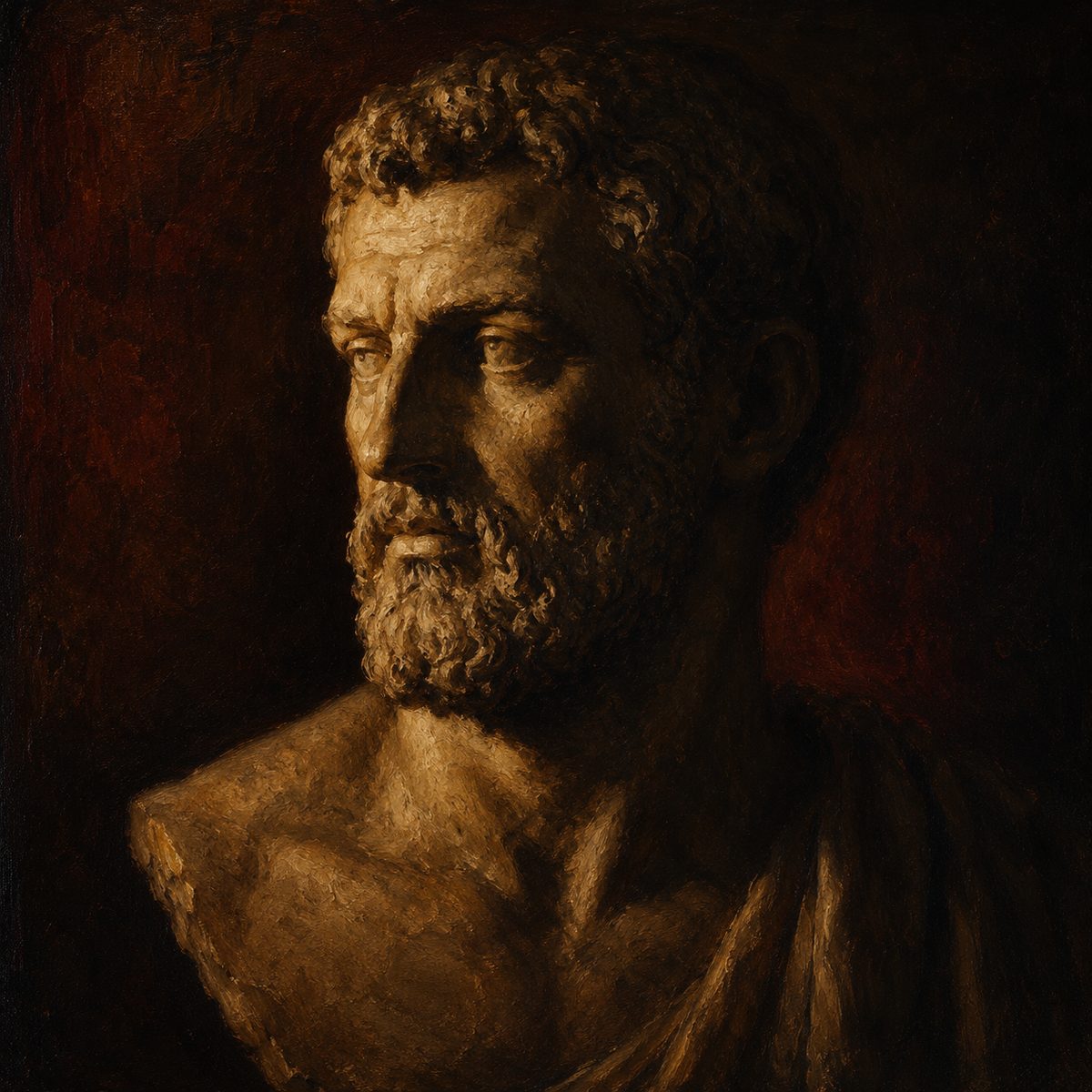
The internet’s Marcus Aurelius is a jaw-clenched emperor who feels nothing cold, unbothered, dominant. Open the actual Meditations, though, and you meet a stranger and far more demanding figure: the most powerful man in the Roman world, writing privately to himself, reminding himself to be gentle. Not as a weakness. As a strength.
That instruction be kind, not angry runs straight through the book. It is also the part most modern “Stoic” content quietly drops, because it doesn’t fit the dominance fantasy. So it’s worth reading what Marcus actually wrote.
Anger isn’t strength — Marcus thought it was weakness
In Book 11 of the Meditations, Marcus hands himself a blunt reframe of what toughness even is:
…to be moved by passion is not manly, but that mildness and gentleness, as they are more agreeable to human nature, so also are they more manly; and he who possesses these qualities possesses strength, nerves and courage, and not the man who is subject to fits of passion and discontent.
Marcus Aurelius, Meditations 11.18 (trans. George Long)
He presses the point in the same passage: “as the sense of pain is a characteristic of weakness, so also is anger.” The person who explodes isn’t dominating the moment he’s been wounded by it, knocked off his own center by somebody else’s behavior. Composure, for Marcus, is the show of strength; the outburst is the tell of weakness.
What the Stoics actually meant by “anger”
Here the popular picture runs backwards the same way it gets “suppressing emotion” backwards. For the Stoics, anger is a passion: not a feeling that simply arrives, but a judgment we sign off on that we’ve been wronged, and that striking back is the fitting response. Remove the judgment and the anger has nothing left to stand on. The goal was never to bottle rage up; it was to stop manufacturing it in the first place.
Seneca took this seriously enough to devote a three-book treatise, On Anger, to the subject arguing that anger can’t be safely kept in small, useful doses. It has to be pulled out by the root.
Marcus’s method: nine reminders, not willpower
Marcus didn’t white-knuckle his temper. He kept a checklist. When someone wrongs you, Book 11 offers nine things to call to mind among them that we were made for one another; that people who do wrong usually act in ignorance rather than malice; that it isn’t the other person’s act that wounds you but your opinion about it; and that your anger costs you more than the offense ever did. The ninth is the hinge:
…a good disposition is invincible, if it be genuine, and not an affected smile and acting a part.
Marcus Aurelius, Meditations 11.18 (trans. George Long)
And notice the tone he rehearses. Faced with someone behaving badly, he scripts a correction, not a takedown: “Not so, my child… I shall certainly not be injured, but thou art injuring thyself.” It’s firm. It’s also kind. He corrects the error without holding the person in contempt.
The root of it: “made for cooperation”
Why bother being gentle with difficult people at all? Marcus answers in the famous passage that opens Book 2 the one usually quoted only for its grim first line:
Begin the morning by saying to thyself, I shall meet with the busybody, the ungrateful, arrogant, deceitful, envious, unsocial… I can neither be injured by any of them… nor can I be angry with my kinsman, nor hate him. For we are made for cooperation, like feet, like hands, like eyelids, like the rows of the upper and lower teeth.
Marcus Aurelius, Meditations 2.1 (trans. George Long)

The opening sounds cynical. The conclusion is the opposite. The point of naming the difficult people in advance isn’t to brace for battle it’s to remember they’re kin. To rage at them is the body’s hand striking its own foot.
Why this is the harder Stoicism
The grindset version is, honestly, the easy one. “Feel nothing, trust no one, dominate” is mostly permission to be cold. Marcus asks for more. He asks you to meet the rude colleague, the difficult co-parent, the incompetent supplier and respond from kinship rather than scorn, while still correcting what genuinely needs correcting.
A concrete place to start is Marcus’s own move: the morning rehearsal. Before the day begins, name the difficult people you’re likely to meet and decide in advance that you won’t be surprised or ruled by them. Then, in the heated moment, swap the question. Not “how do I win this?” but “what would a good disposition do here?” and recall the arithmetic of his eighth rule: the anger will cost you more than whatever set it off.
Marcus’s kindness wasn’t softness. It was an emperor refusing to let other people’s worst moments write his character. That’s the side modern Stoicism skips and it’s the part that actually takes strength.
Related reading
- Stoicism Is Not About Suppressing Emotion
- Epictetus: The Slave Who Taught Emperors
- A Stoic Morning Routine
- Who Was Marcus Aurelius?
Sources
- Marcus Aurelius, Meditations, trans. George Long (public domain) Books 2 & 11. Standard Ebooks; Project Gutenberg.
- Seneca, On Anger (De Ira) Encyclopaedia Britannica.
- “Marcus Aurelius” Encyclopaedia Britannica; Internet Encyclopedia of Philosophy.
- “Stoicism” (the passions) Internet Encyclopedia of Philosophy.