The Four Stoic Virtues: Wisdom, Courage, Justice, and Temperance
Strip Stoicism down to its foundation and you don’t find “stay calm” or “don’t complain.” You find four virtues. For the Stoics these weren’t nice-to-haves they were the entire definition of a good life. Everything else, from wealth to health to reputation, was secondary. Understand the four and you understand what Stoicism is actually for.
They are wisdom, courage, justice and temperance. The Stoics borrowed the list from Plato and made a radical claim about it: virtue is the only true good, and it is enough, by itself, for a flourishing life.
First: virtue is the “only good”
Start with the claim that sounds extreme. For the Stoics, virtue good character is the only thing good without qualification, and vice the only real evil. Everything else (money, status, even health) is an “indifferent”: often preferable, but not good or bad in itself, because it can be used well or badly. The consequence is liberating: a good life sits entirely within your control, because it depends on your character, not your luck. That is the engine beneath all four virtues.
1. Wisdom
Wisdom is knowing what actually matters and above all telling apart what you control from what you don’t. It’s the master virtue; the other three are really wisdom applied to particular situations. Epictetus opens his handbook with its core skill:
Some things are in our control and others not.
Epictetus, Enchiridion 1 (trans. Elizabeth Carter)
The Stoics subdivided it into good sense, sound judgment and discretion. Less about cleverness, more about seeing clearly.
2. Courage
Not bravado endurance: the strength to do the right thing under fear, pressure or discomfort. The Stoics folded patience, perseverance and confidence into it. Marcus even redefines toughness around it:
…mildness and gentleness… are more manly; and he who possesses these qualities possesses strength, nerves and courage, and not the man who is subject to fits of passion.
Marcus Aurelius, Meditations 11.18 (trans. George Long)
Stoic courage is as much about holding your character in a tense room as facing a sword.
3. Justice
Often called the most important of the four, justice is treating others fairly and playing your part in the human community. The Stoics were cosmopolitans every person is kin. Marcus reminded himself of it each morning:
we are made for cooperation, like feet, like hands, like eyelids, like the rows of the upper and lower teeth.
Marcus Aurelius, Meditations 2.1 (trans. George Long)
Wisdom and courage that don’t serve other people, for a Stoic, aren’t really virtue at all.
4. Temperance
Self-control, moderation, knowing how much is enough not joyless restraint, but the right amount of the right thing at the right time. Epictetus gave the cleanest image:
Remember that you must behave in life as at a dinner party… is anything brought around to you? Put out your hand and take your share with moderation.
Epictetus, Enchiridion 15 (trans. Elizabeth Carter)
Temperance is the discipline that keeps the other three from tipping into excess.
They’re really one thing
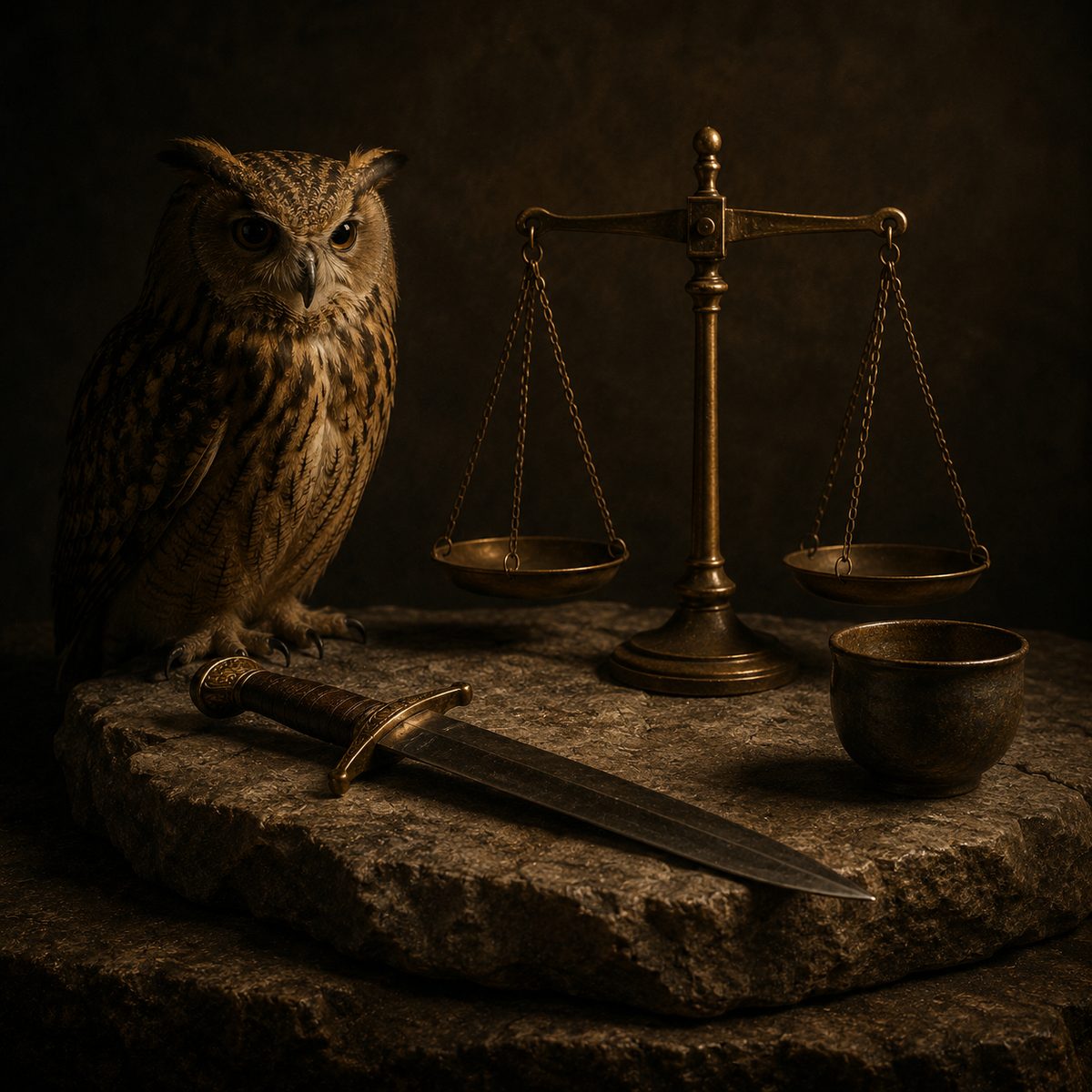
Here’s the part most summaries miss: the Stoics insisted the four are a unity to truly have one is to have them all. The same clear mind that sees what matters (wisdom) acts on it bravely (courage), fairly (justice) and in due measure (temperance). They’re four angles on a single good character, not a menu to choose from.
How to actually use them
The virtues aren’t a poster; they’re a decision filter. Run any hard choice through four quick questions: What’s the wise move (what’s really in my control)? What’s the courageous one (what am I avoiding out of fear)? What’s the just one (how does this land on other people)? What’s the temperate one (is this the right amount)? When all four point the same way, act. When they don’t, you’ve found exactly what’s worth thinking harder about.
Stoicism isn’t ultimately about staying calm. Calm is a by-product. The goal is character, built from these four virtues because the Stoics believed it’s the one thing the world can never take from you.
Related reading
- Epictetus: The Slave Who Taught Emperors
- How to Deal With Anxiety the Stoic Way
- Real Stoic Quotes, Properly Sourced
Sources
- “Stoic Ethics” — Internet Encyclopedia of Philosophy (the four virtues, “virtue is the only good,” the unity of virtue).
- Epictetus, Enchiridion 1 & 15, trans. Elizabeth Carter (public domain) Internet Classics Archive (MIT).
- Marcus Aurelius, Meditations 2.1 & 11.18, trans. George Long (public domain) Standard Ebooks.