Zeno of Citium: The Shipwrecked Merchant Who Founded Stoicism
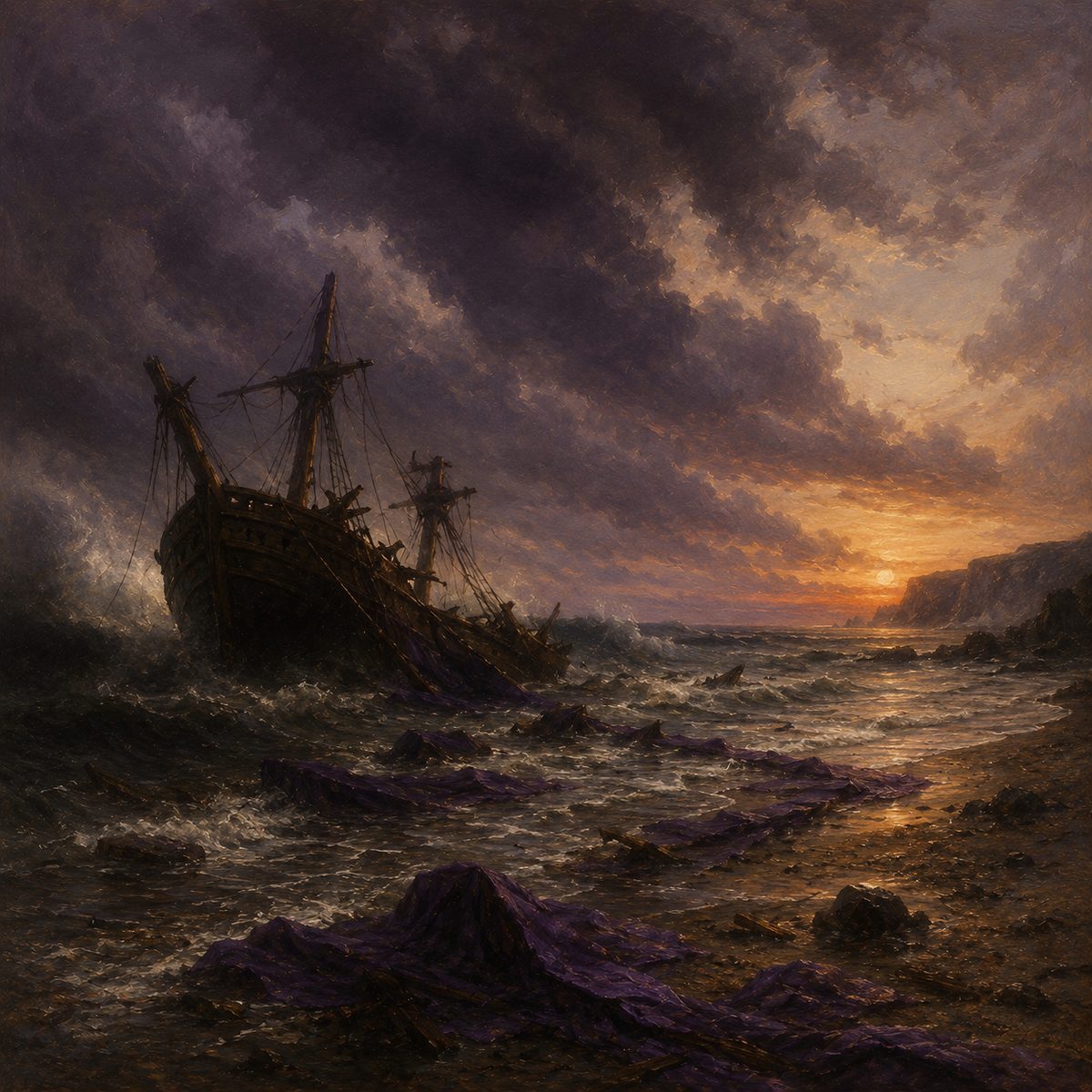
Stoicism began with a disaster. Around 300 BCE, a Phoenician merchant named Zeno was carrying a cargo of precious purple dye across the Mediterranean when his ship went down. He lost everything. Washed up in Athens, broke and adrift, he wandered into a bookshop and walked out onto the road that led him to found one of history’s most enduring philosophies.
It’s a fitting origin, because the philosophy he created is, above all, about what to do when you lose what you could never control. Here is the story of Zeno and the birth of Stoicism.
The merchant
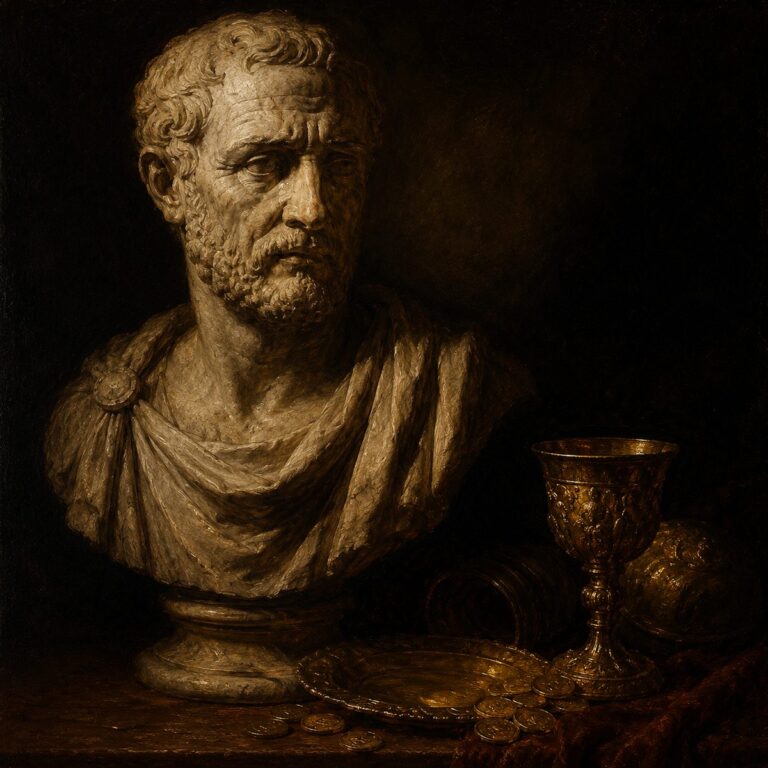
Zeno was born around 334 BCE in Citium, a Greek-Phoenician city on Cyprus. He went into trade, dealing in (among other things) Tyrian purple the most expensive dye in the ancient world. By the accounts we have he did well, until a shipwreck on a voyage toward Piraeus, the port of Athens, cost him his cargo and his fortune in a single stroke.
The bookshop
Stranded and ruined in Athens, Zeno wandered into a bookseller’s and picked up Xenophon’s Memorabilia, a portrait of Socrates. He was so struck by it that he asked the bookseller where men like Socrates could be found. As it happened, the Cynic philosopher Crates of Thebes was walking past; the bookseller simply pointed. Zeno followed and became his pupil.
He studied under Crates and other Athenian philosophers for years. Looking back, he reportedly had no regrets about the catastrophe that brought him there:
I made a prosperous voyage when I was shipwrecked.
Zeno of Citium, as reported by Diogenes Laertius
Ancient biographers loved a tidy story, so we can’t be certain every detail is literally true. But it captures something real: Stoicism grew directly out of the rigorous, austere philosophy of the Cynics.
The Painted Porch
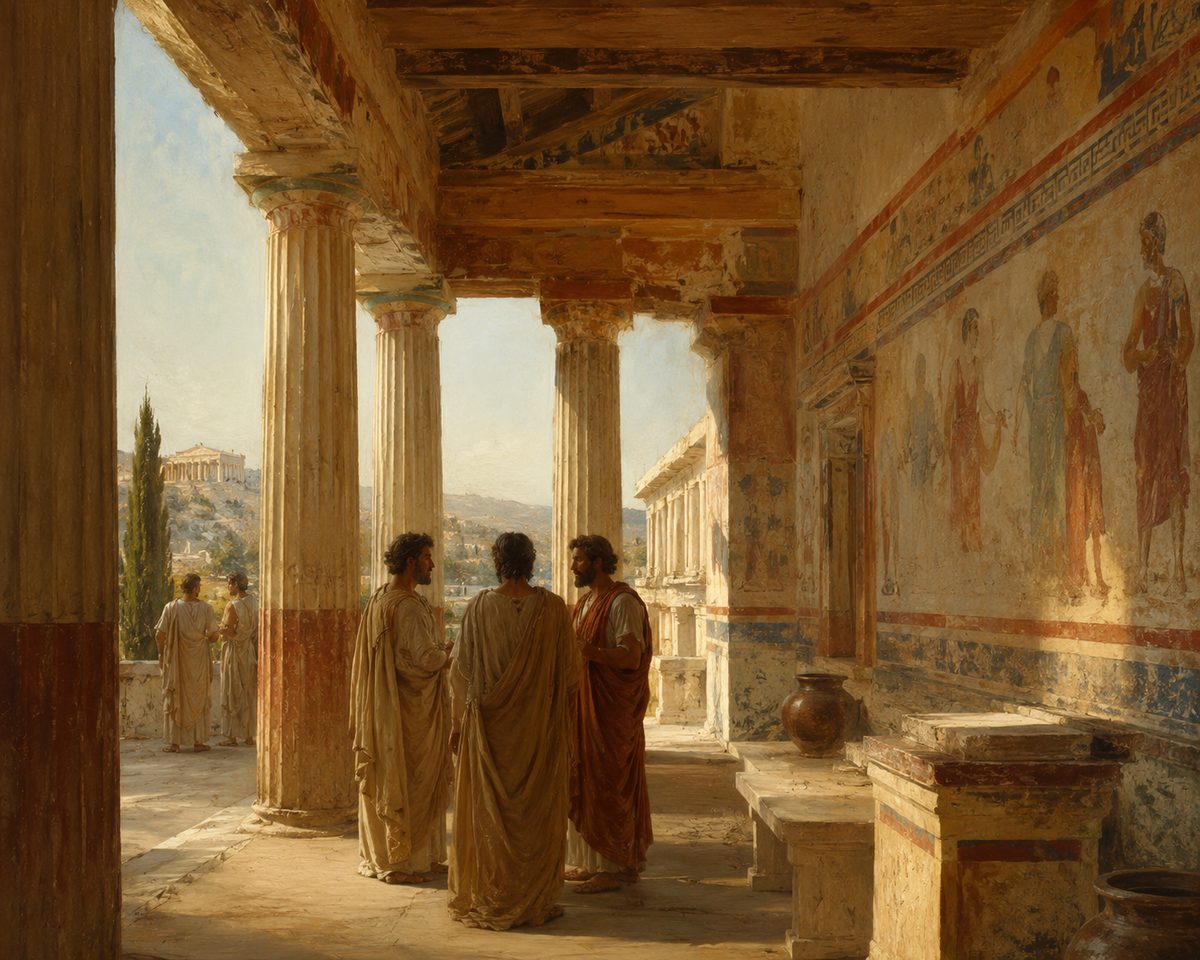
Around 300 BCE, Zeno began teaching his own philosophy. He didn’t open a private academy he taught in public, in a colonnade on the edge of the Athenian agora called the Stoa Poikile, the “Painted Porch,” named for the murals on its walls. His followers became known as the people of the Stoa the Stoics. The philosophy is, quite literally, named after a porch.
The setting fit the message. Unlike Epicurus, who withdrew into a private garden, Zeno taught out in the open, in the middle of the city an early sign of Stoicism’s lasting bent toward engagement with the world rather than retreat from it.
What Zeno started
Zeno’s own writings are lost; we know his ideas through later reports and the Stoics who followed Cleanthes and Chrysippus, who systematised the school, and, centuries later, the Romans we still read: Seneca, Epictetus and Marcus Aurelius. But the core was his: that virtue is the only true good, that we should live “in agreement with nature” and reason, and that a good life is built from character, not circumstances.
It’s hard to miss the symmetry. The man who lost a fortune to forces beyond his control founded the philosophy of separating what we control from what we don’t. Stoicism didn’t come from a comfortable theorist. It came from someone who had been wrecked and rebuilt.
Twenty-three centuries later we don’t have Zeno’s books, his dye or his ship. We have the porch’s name, and the philosophy he taught beneath it which may be exactly the legacy he’d have wanted: not the cargo, but the character.
Related reading
- Epictetus: The Slave Who Taught Emperors
- Seneca: Stoic Sage or Hypocrite?
- Stoicism vs Epicureanism
- Who Was Seneca?
Sources
- “Zeno of Citium” — Britannica; Wikipedia; “Stoicism” Internet Encyclopedia of Philosophy.
- The shipwreck and bookshop story Diogenes Laertius, Lives of the Eminent Philosophers, Book VII (public domain).